


Planning surgery in Thailand?
Meet your surgeon on a free video call first. Plan your cover with every detail in hand.
Start with a free consultationGood insurance is one of the easiest ways to feel calm about your trip. Standard travel policies are built for holidays, so most don't include a planned procedure. The fix is simple: tell your insurer, and choose cover made for medical travel.
Governments in Australia, New Zealand, the UK, Canada and the US give the same advice, and it takes an afternoon to sort out. This guide walks you through it, step by step, for a trip to Thailand.
Beauty Butler is a Bangkok-based medical tourism agency that coordinates cosmetic surgery for patients from Australia, New Zealand, the US, Canada and the UK.
This is general information, not financial or insurance advice. Always read your own policy wording.
Key Takeaways
- Standard travel insurance is built for holidays, so it usually leaves out planned surgery (GOV.UK).
- Tell your insurer about your surgery so your cover stays valid (Travel Aware).
- Specialist medical travel cover exists, for example Medical Travel Shield in the UK and Australia. Governments in Australia, New Zealand and the UK advise it.
- Normal travel insurance still helps with emergencies that have nothing to do with your surgery, if your insurer confirms it still applies.
- Check five things: complications, medical evacuation, extra nights, pre-existing conditions and how long cover lasts after you fly home.
- Your healthcare at home still looks after you once you are back, like any other patient.
- Insurance and a revision policy do different jobs. Together they give you full peace of mind.
Does travel insurance cover cosmetic surgery abroad?
Usually not, and that is easy to fix. Standard travel insurance is built for the unexpected: an accident, a sudden illness, a lost bag. A planned procedure is something you choose and plan, so most holiday policies leave it out.
Governments in the UK, Canada, Australia and New Zealand say the same, and all point to the same simple answer: cover made for medical travel (GOV.UK; Travel.gc.ca; Smartraveller; SafeTravel).
What good cover takes care of
The right policy gives you peace of mind on the small "what ifs" of any trip, such as:
- Extra care if your surgeon wants to check something after surgery
- A few more hotel nights and a changed flight, if your surgeon suggests resting a little longer
- A medical escort on the flight home, if it is ever needed
Most recoveries go to plan. Good cover simply means you don't have to think about the rest.
Why should you tell your insurer about your surgery?
It keeps your cover valid, with no surprises later. Some holiday policies don't apply if planned treatment is the reason for the trip. Telling your insurer up front means you know exactly where you stand.
The UK's Travel Aware campaign suggests specialist cover for planned treatment abroad (Travel Aware), and New Zealand's SafeTravel asks you to share your plans with your insurer before you go (SafeTravel). It is a short email, and it makes everything else simple.
What is specialist medical travel insurance?
It is cover written for people who travel for a planned procedure. Governments in Australia, New Zealand and the UK point travellers towards it. SafeTravel's advice is to "get a specialised policy that covers the costs of your specific procedure", including complications and medical evacuation (SafeTravel).
These policies differ a lot. Some cover complications only. Some have a time limit. Some leave out certain procedures. The UK's TravelHealthPro advises insurance "that covers all potential complications, including the cost of medical evacuation back to the UK" (TravelHealthPro).
Examples of specialist cover in the UK and Australia
Specialist insurers do exist. One example is Medical Travel Shield, which offers a separate policy for each country:
- UK: Medical Travel Shield (UK) has several levels. Its basic level covers the travel only. Its higher levels add cover for complications and delayed recovery, and its top level adds a return trip for revisions. Policies are underwritten at Lloyd's.
- Australia: Medical Travel Shield (Australia) is provided by ATC, an Australian company, on behalf of underwriters at Lloyd's. It is built for Australians travelling abroad for cosmetic, dental or elective treatment.
We name them as examples, not as a recommendation. Levels, limits and exclusions change, so compare a few policies and read the full wording for your procedure and your trip.
Normal travel insurance still has a job
A standard travel policy is still useful for everything that has nothing to do with your surgery: an accident, an unrelated illness, a delayed flight or a lost bag. Before you rely on it, ask your insurer to confirm in writing that this cover still applies when surgery is part of the trip.
What should you check in any policy?
Check that the wording covers your procedure, your dates and the weeks after you fly home. The summary page is a start. The full policy wording (in Australia, the Product Disclosure Statement) is what counts. Look for six things.
1. Complications from your procedure
Does the policy cover treatment for complications of your planned surgery? Is there a time limit, such as a set number of days after the operation? Does cover continue once you're home?
2. Medical evacuation and a medical escort
The CDC advises insurance "that covers medical evacuation back to the United States" (CDC). Canada adds that a policy should also cover "the costs of a medical escort" (Travel.gc.ca). Many specialist policies include both.
3. An extended stay
If your surgeon wants you to stay a few more days, who pays for the extra nights and the changed flight? SafeTravel asks you to understand "post-care costs if you need to stay longer due to post-surgical complications" (SafeTravel).
4. Pre-existing conditions
Insurers handle health conditions differently. Moneysmart explains that an insurer may cover a condition, cover it for an extra cost, or exclude it (Moneysmart). Canada advises getting a written agreement if a pre-existing condition is covered (Travel.gc.ca).
5. Elective and cosmetic exclusions
Search the wording for "elective", "cosmetic" and "planned treatment". Canada notes that travel health insurance "rarely covers routine health checkups, non-emergency care or cosmetic surgery" (Travel.gc.ca).
6. If your plans change before surgery
Your surgeon checks your health again in person before surgery. If they ever suggest a different date for a health reason, it helps to know your flights and bookings are protected. Ask whether that is covered, and keep the answer in writing.
What about your healthcare at home?
Your healthcare at home still looks after you. Once you are back, your GP and your local public health system care for you like any other patient, and emergency care works as usual.
The one thing to check is cosmetic follow-up work, such as a revision. Victoria's Better Health Channel notes that extra treatment back home may not be covered by Medicare (Better Health Channel). In the US and Canada, your own health plan sets the rules, so a quick call before you travel is worth it (CDC; Travel.gc.ca).
A simple question for your GP or insurer: "If I need care after surgery abroad, what would you cover?"
What should your surgeon and agency cover, and what should insurance cover?
Insurance covers money for the unexpected. Your surgeon and agency cover the care. The two work together, and neither replaces the other. Before you book, ask for both in writing.
Your surgeon and agency should be able to tell you, clearly:
- Who looks after you in Bangkok during recovery
- What happens if a complication occurs while you're in Thailand
- How you reach them once you're home
- What their revision policy covers, and what it doesn't
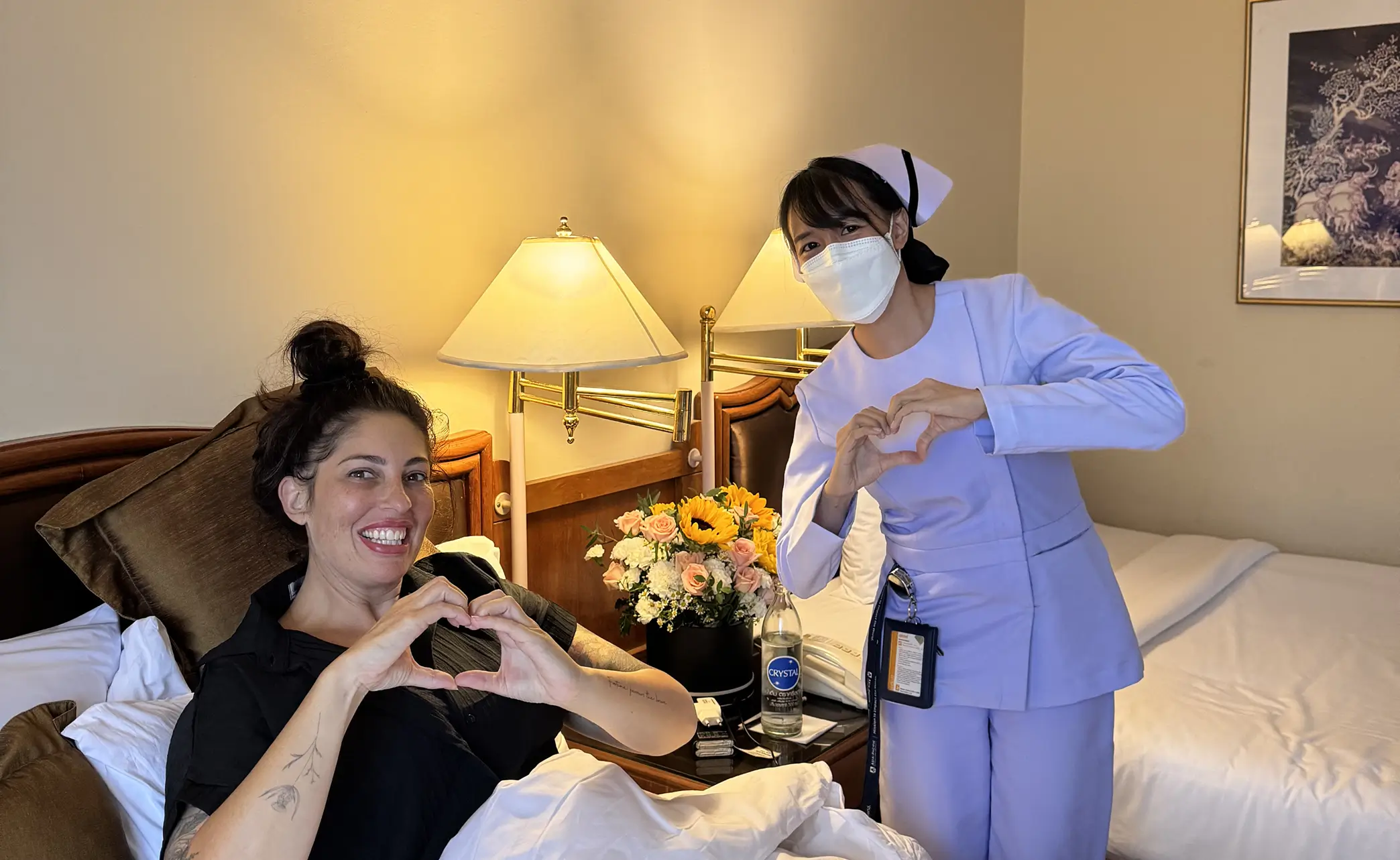
With Beauty Butler, our own registered nurses visit you at your recovery hotel during the first week. After you fly home, you email our aftercare team and get an answer within 24 hours, with a video call with your surgeon if needed. Our revision policy is written down and public. It isn't insurance: it doesn't cover travel costs or a change of mind about the look.
Insurance handles the cost of a rare emergency. Your care team handles the rest. Our guide to how to choose a surgeon and agency in Thailand has more questions to ask.
Questions to ask before you buy
Email these questions to the insurer, so the answers are in writing. A clear written reply is worth more than a summary page.
- Does this policy cover me if the reason for my trip is planned cosmetic surgery?
- Does it cover complications of my specific procedure? For how long after surgery?
- Does cover continue for complications after I return home?
- Is medical evacuation included? Is a medical escort included?
- If my surgeon asks me to stay longer, are extra hotel nights and a changed flight covered?
- How are my pre-existing conditions treated? Can I have that in writing?
- If my surgeon advises against surgery for a health reason, can I claim back my costs?
- What are the limits, the excess and the main exclusions?
- Does the rest of my travel cover (luggage, unrelated illness) still apply?
It helps to know what your surgery quote includes before you compare policies. Our guide to what's in a Thailand surgery quote walks through it.
What does the government advise in your country?
Every country says the same thing: tell your insurer, check the wording, and plan ahead. Here is the official advice for yours.
- Australia: Smartraveller, Going overseas for a medical procedure.
- New Zealand: SafeTravel, Medical tourism.
- United Kingdom: GOV.UK, In hospital abroad, and Travel Aware, Surgery abroad.
- Canada: Travel.gc.ca, Travelling outside Canada to receive medical care.
- United States: CDC, Medical tourism.
For the wider safety picture, read our guide to cosmetic surgery abroad risks. To check a provider, see how to research reviews.
Your next step
Start with a free consultation. You meet your surgeon on a video call before any deposit. You learn your procedure, your dates and how long to stay. Those are the details an insurer will ask for. Our FAQ answers the most common questions too.
Start with a free consultation
Frequently asked questions
Will my normal travel insurance cover complications from cosmetic surgery in Thailand?
Usually not, because standard policies are built for holidays, not planned treatment. The fix is simple: tell your insurer about your surgery and choose cover made for medical travel. Governments in Australia, New Zealand, the UK and Canada give the same advice.
What is medical travel insurance?
It is specialist cover for people travelling for a planned procedure. Governments in Australia, New Zealand and the UK advise buying a specialised policy for medical tourism. These policies differ a lot. Some cover complications only, so check what is included, the limits, and how long the cover lasts after you fly home.
Do I need to tell my insurer I'm having surgery abroad?
Yes. Telling your insurer up front keeps your cover valid and means no surprises later. New Zealand's SafeTravel and the UK's Travel Aware campaign both advise it, and it is the easiest way to know exactly what you are covered for.
Does insurance cover medical evacuation after surgery abroad?
It depends on the policy, so it is worth checking. The CDC, Canada and New Zealand all suggest choosing cover that includes medical evacuation home, and Canada also suggests a medical escort. Many specialist policies include both.
Will my healthcare at home help if I need care after I return?
Yes. Your GP and your local public health system look after you like any other patient, and emergency care works as usual. Cosmetic follow-up work, such as a revision, may not be covered at home, so ask your GP or health insurer before you travel.
Is a revision policy the same as insurance?
No. A revision policy is a promise from your surgeon or agency about correcting a confirmed surgical issue. It does not pay for flights, extra hotel nights or emergency care, and it does not replace insurance. You want both, and you want both in writing before you book.
This article is general information, not medical, financial or insurance advice. Policies vary, so always read your own policy wording and ask your insurer in writing.
References
- GOV.UK (FCDO), In hospital abroad, retrieved 2026-11-12, https://www.gov.uk/guidance/in-hospital-abroad
- Travel Aware (UK Government), Surgery abroad, cut out the risk, retrieved 2026-11-12, https://travelaware.campaign.gov.uk/surgery-abroad-cut-out-the-risk/
- TravelHealthPro (NaTHNaC), Travelling for treatment (medical tourism), retrieved 2026-11-12, https://travelhealthpro.org.uk/factsheets/travelling-for-treatment-medical-tourism
- Smartraveller (Australian Government), Going overseas for a medical procedure, https://www.smartraveller.gov.au/before-you-go/health/medical-tourism
- SafeTravel (New Zealand Government), Medical tourism, retrieved 2026-11-12, https://www.safetravel.govt.nz/before-you-go/what-you-re-doing/medical-tourism
- Government of Canada, Travelling outside Canada to receive medical care, retrieved 2026-11-12, https://travel.gc.ca/travelling/health-safety/medical-care-outside-canada
- Government of Canada, Trip interruption and travel health insurance, retrieved 2026-11-12, https://travel.gc.ca/travelling/documents/travel-insurance
- CDC, Medical tourism, retrieved 2026-11-12, https://wwwnc.cdc.gov/travel/page/medical-tourism
- Moneysmart (ASIC), Travel insurance, https://moneysmart.gov.au/other-types-of-insurance/travel-insurance



The results you want — for a fraction of the cost.
Thailand's top surgeons, concierge care from first hello to flight home, and no hidden prices. Curious what's possible for you?
Explore your optionsTrue luxury is peace of mind, especially when you are far from home.