

Want a clear plan before you decide?
Ask us what happens if something goes wrong. We answer in writing, before you pay anything.
Start with a free consultationThe risks of the surgery itself are the same in Thailand as at home. What changes is distance. You fly after surgery, and later you're far from your surgeon. Australia's government travel advice is clear: "There are always risks with medical procedures," wherever you have them (Smartraveller, 2026). So the real question isn't whether something could go wrong. It's what happens if it does.
If you've searched this topic, you've probably read warnings from surgeons at home. Many of their points are fair. This guide looks at both sides calmly: what's the same, what's different, and the plan you need before you book.
Beauty Butler is a Bangkok-based medical tourism agency that coordinates cosmetic surgery for patients from Australia, New Zealand, the US, Canada and the UK.
Key Takeaways
- The risks of an operation are the same anywhere: bleeding, infection, slow healing, a result you didn't expect.
- The extra risks of going abroad come from distance: the flight home and follow-up from far away.
- Basic travel insurance rarely covers medical tourism. Get a specialised policy (Smartraveller, 2026).
- You pay much less abroad. The trade-off: if a correction is needed, you may need to fly back.
Are the risks of surgery the same in Thailand as at home?
Yes, the medical risks of the operation are the same. In 2026, Smartraveller notes that "many hospitals overseas are a similar standard to hospitals in Australia," while quality varies by country and hospital (Smartraveller). An experienced surgeon in an accredited hospital carries the same risks in Bangkok as in Brisbane.
Every operation carries risks, wherever it happens:
- Bleeding or fluid build-up under the skin
- Infection of the wound
- Slow healing or wound problems
- Scarring that heals differently than hoped
- A result you didn't expect, or one side healing differently from the other
What lowers these risks is the same everywhere too. A qualified surgeon who does your procedure often. An accredited hospital. Honest screening before surgery. And good care in the days after.
That's why choosing your surgeon and hospital matters more than choosing a country. Our guide to whether cosmetic surgery in Thailand is safe covers what to check.
What are the extra risks of having surgery abroad?
The extra risks come from travel and distance, not from the operation. In 2024, the US Centers for Disease Control and Prevention noted that anyone travelling more than four hours can be at risk of blood clots. Recent surgery, within three months, is one of the factors that raises that risk (CDC, 2024).
There are three to plan for:
1. The flight home. Long flights after surgery raise the risk of blood clots. That's why you stay in Bangkok until your surgeon clears you to fly. For most procedures that's about two weeks. For larger body surgery, it can be three.
2. Distance from your surgeon later. Once you're home, your surgeon is a flight away. Small questions can be handled by photos and video. Anything bigger needs a plan.
3. Being away from your own support. You recover in a new place. Smartraveller advises you to take someone with you, if you can.
None of these are reasons not to go. They're reasons to plan well.
Can anyone promise that nothing will go wrong?
No. And you should be careful of anyone who does. In 2026, Smartraveller advises patients to compare the complication risks they're given abroad with those quoted at home. It also says to "be wary if a hospital overseas suggests much lower risks" (Smartraveller). Honest surgeons talk about risk openly.
Most patients heal well. But a small number need extra care, wherever they had surgery. So the useful question isn't "Will anything go wrong?" It's "If something does, who handles it, and how?"
That's the question that separates a good company from a risky one. Ask it before you pay. A clear, written answer is a good sign. "Don't worry, it never happens" is not.
What happens if something goes wrong after you fly home?
You contact your care team, share photos, and your surgeon reviews your case. With Beauty Butler, follow-up consultations with your surgeon are available on request after you're home. If your surgeon confirms a surgical issue, our written 12-month revision policy applies.
Here's how our revision policy works:
- Your surgeon waives their fee for the correction.
- We contribute part or all of the hospital cost. Any remaining share is confirmed before you travel.
- Your aftercare after the revision is included, the same as your first trip.
- It's done by your original surgeon, at your original hospital, usually 6 to 12 months after the first surgery, once healing allows.
- Your flights and stay for that trip are your own.
The policy covers confirmed surgical issues. It doesn't cover a change of mind about the look, natural asymmetry, or the normal risks of healing. The full terms are on the revision policy page.
Do you need travel insurance for surgery abroad?
Yes, and it needs to be the right kind. In 2026, Smartraveller warns that "basic travel insurance policies rarely cover medical tourism." It advises a specialised policy that covers your procedure, and asking about post-operative care, complications and medical evacuation (Smartraveller).
When you compare policies, check:
- Complications of your specific procedure, during the trip and after
- Medical evacuation, if it's ever needed
- Post-operative care, including extra nights or hospital time
- What's excluded. Read the policy wording, not just the summary
Tell the insurer everything about your plans. Smartraveller notes that you may void your policy if you don't. Our revision policy doesn't replace insurance. If your insurance covers part of a revision, it's used first.
How much do you really save, and what's the trade-off?
You usually pay a fraction of the home price, and the price includes more. In 2026, a tummy tuck in Australia typically costs AUD 15,000 to 40,000 (Plastic Surgery Hub). With Beauty Butler, a full tummy tuck starts from THB 130,000, about AUD 5,500, with your recovery support available in the same quote.
The trade-off is simple and worth saying plainly. At home, if you need a correction, your surgeon is a short drive away. Abroad, you may need to fly back for it. Under our revision policy, your surgeon's fee is waived and we contribute to the hospital cost. Your flights and stay for that trip are yours.
For most patients, the savings are much larger than the cost of a possible second trip. But it's your decision, and it should be made with the full picture. Our guide to what's in a Thailand surgery quote shows how a complete price is built.
Who should stay at home for surgery?
Surgery abroad isn't right for everyone. In 2026, Smartraveller advises talking to your own doctor about your plans and getting a health check at least six weeks before you travel (Smartraveller). That conversation often answers this question.
Staying at home may suit you better if:
- You can't take two weeks away for the surgery and recovery
- You have a health condition that needs close, ongoing monitoring by your own doctors
- You've had a blood clot before, or your doctor advises against long flights
- You'd feel anxious being far from your surgeon in the months after
Going abroad tends to suit people who are healthy, can take the time, and want a calm recovery with support around them. Our checklist for surgery abroad helps you decide.
How Beauty Butler plans for the "what if"
We plan your trip around your safety first. At Beauty Butler, you meet your surgeon by free video consult before any payment. Your health is checked in Bangkok before surgery. All surgery takes place in JCI-accredited hospitals.
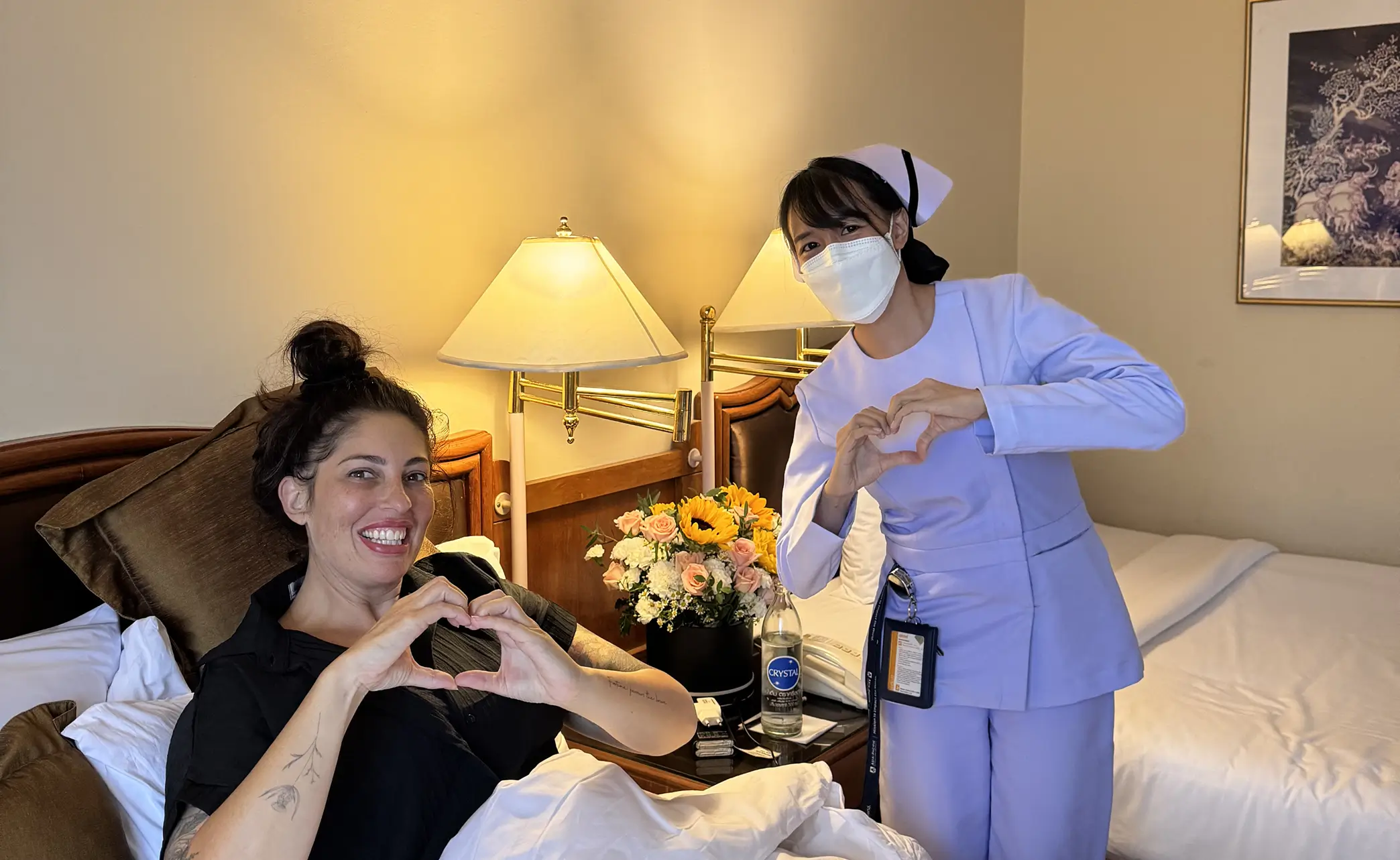
After surgery, our own nurses visit you at your hotel and take you to every hospital follow-up. You fly home only when your surgeon clears you. After you're home, you can email our team any time and get an answer within 24 hours. If needed, we arrange a follow-up video call with your surgeon.
You can read how other patients found it in our patient stories. For more on the trip home, see flying after cosmetic surgery.
Your next step
Start with a free consultation. Ask us anything on this page, including what happens if something goes wrong. We'll answer in writing, and you'll meet your surgeon by video before you pay anything.
Start with a free consultation
Frequently asked questions
Is cosmetic surgery abroad riskier than at home?
The risks of the operation itself are the same with an experienced surgeon in an accredited hospital. The extra risks come from distance: the long flight after surgery and being far from your surgeon later. Staying until your surgeon clears you to fly, and having a written follow-up plan, reduce both.
What happens if something goes wrong after I fly home?
Contact your care team and share photos. With Beauty Butler, your surgeon reviews your case, with a video consult if helpful. If a surgical issue is confirmed within 12 months, our revision policy applies: your surgeon waives their fee and we contribute to the hospital cost. Travel is your own.
Does travel insurance cover cosmetic surgery abroad?
Usually not on a basic policy. Australia's Smartraveller says basic travel insurance rarely covers medical tourism and advises a specialised policy. Ask about complications, post-operative care and medical evacuation, and tell the insurer about your procedure, or the policy may be void.
How long should I stay in Thailand before flying home?
Most patients stay about two weeks, and up to three for larger body surgery. The CDC notes that flights over four hours can raise the risk of blood clots, and recent surgery adds to that risk. You fly only when your surgeon clears you.
Who should not have surgery abroad?
Surgery abroad may not suit you if you can't take two to three weeks away. The same goes if you need close monitoring for a health condition, have had a blood clot, or would feel anxious far from your surgeon. Talk to your own doctor first, ideally at least six weeks before you travel.
This article is for general information and isn't medical advice. Your surgeon will give you guidance for your procedure and health, including a free video consultation before anything is booked.
References
- Australian Government, Smartraveller, Going overseas for a medical procedure (updated 2026-08-18), retrieved 2026-10-25, https://www.smartraveller.gov.au/travel-essentials/travel-health/medical-tourism
- US Centers for Disease Control and Prevention, Understanding Your Risk for Blood Clots with Travel (2024), retrieved 2026-10-25, https://www.cdc.gov/blood-clots/risk-factors/travel.html
- Plastic Surgery Hub, Body Surgery Prices in Australia, retrieved 2026-10-25, https://www.plasticsurgeryhub.com/pricing/body-surgery-prices-in-australia/
- Beauty Butler, Revision Policy, retrieved 2026-10-25, https://www.beautybutlerthailand.com/resources/revision-policy


The results you want — for a fraction of the cost.
Thailand's top surgeons, concierge care from first hello to flight home, and no hidden prices. Curious what's possible for you?
Explore your optionsTrue luxury is peace of mind, especially when you are far from home.