
.webp)
Decided Thailand is the stronger fit for you?
Talk it through with a surgeon, free of charge, before you commit to anything.
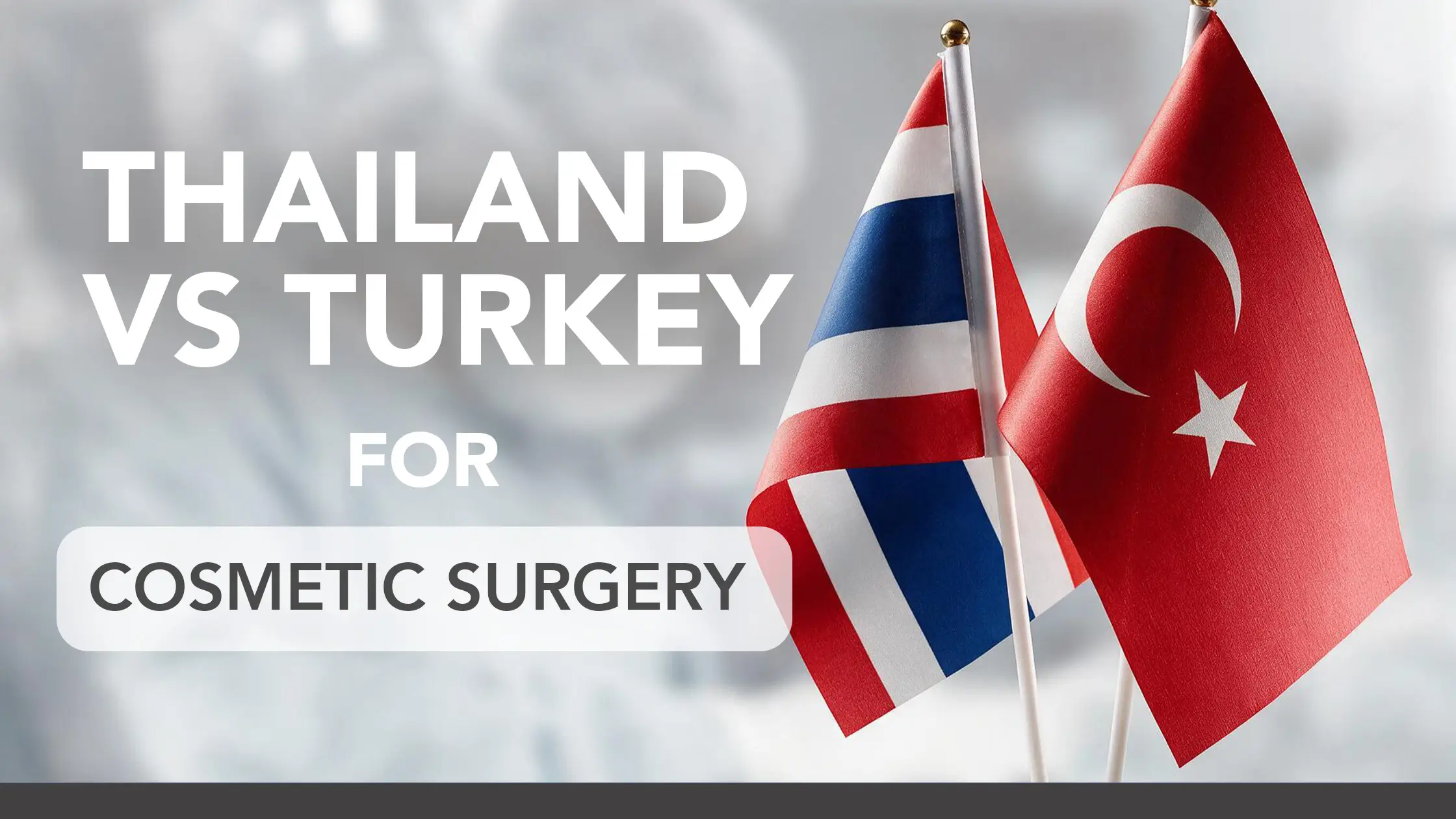
Start with a free consultationFor most cosmetic surgery, Thailand is the stronger choice. Turkey's clear strength is hair transplants, where its specialist volume is real. Thailand has more than 60 JCI-accredited hospitals nationwide, more than double Turkey's roughly 40 to 46, according to Joint Commission International's directory. This guide lays out the honest comparison, procedure by procedure, so you can see where each country actually stands.
If you're researching "Thailand vs Turkey," you likely already have one procedure in mind. Both countries have built real, well-known medical tourism industries around cosmetic surgery. Turkey has genuinely earned its reputation in hair transplants. Outside that one area, Thailand's broader surgical track record, hospital accreditation numbers and, for Australian and New Zealand patients, far shorter flight make it the stronger option. This guide compares flight time, hospital accreditation, cost, specialty strengths, language and climate, so you can see the honest picture rather than a generic ranking.
How do flight times compare between Thailand and Turkey?
For Australian and New Zealand patients, Bangkok is by far the shorter flight. Bangkok is roughly half the flight time of Istanbul. Sydney to Bangkok is a nonstop 9 hours 50 minutes. Sydney to Istanbul takes 19 to 21 hours with a stop.
Australia and New Zealand: Thailand is roughly half the flight time
Sydney to Bangkok is a nonstop flight of about 9 hours 50 minutes. Sydney to Istanbul often takes 19 to 21 hours with at least one stop (flight-time aggregator data, 2026). From Auckland, the gap grows even more. Auckland to Bangkok is a nonstop 12 hours 15 minutes. Auckland to Istanbul takes 26 to 35 hours, depending on the route and stopover.
For patients recovering from surgery, that difference is not small. A shorter, direct flight home means less time sitting with swelling, and less travel tiredness added to your recovery.
In short: if you're flying from Sydney or Auckland, Bangkok is by far the shorter, more comfortable trip to make right after surgery.
Which country has more JCI-accredited hospitals?
Thailand has more than 60 JCI-accredited hospitals nationwide. Turkey has roughly 40 to 46, most of them in Istanbul. These numbers come from Joint Commission International's public directory of accredited hospitals. Both countries are world leaders in JCI-accredited hospitals. That is a real strength for each one, not a case of one being accredited and the other not.
JCI accreditation checks a hospital's systems and processes. It includes a surprise on-site visit and a renewal every three years. It does not check any one board-certified surgeon's skill. So it's one thing to check, not the whole picture. For a full breakdown of what the JCI badge covers, see our honest guide to JCI-accredited hospitals in Bangkok. It includes a checklist to use alongside it.
What this means for you: Thailand's larger number of accredited hospitals spreads across more cities. Turkey's accredited hospitals sit mostly in Istanbul, where most of its overseas cosmetic surgery happens. Either way, the same rule applies. Check that hospital's current accreditation status with Joint Commission International before you book. Don't just rely on a clinic's own claim.
Is Thailand or Turkey cheaper for cosmetic surgery?
Prices between the two countries are similar for standard cosmetic surgery. Both offer real savings compared with home prices in the US, UK and Australia. Sources in the industry disagree on which country runs lower for a given procedure. Some say Turkey's bundled package pricing tends to run a little lower on common procedures. Don't choose either country on price alone.
That mixed picture matters more than it looks. A price that seems lower on a comparison site often hides a different scope, a different hospital tier, or less aftercare. The number worth comparing is not the headline price. It's what that price actually covers: surgeon fee, hospital fees, anaesthesia, your stay, and follow-up care.
Both countries built their medical tourism industries around real savings, without lowering surgical standards. That's because local wages, hospital costs and facility costs are much lower than in the US, UK, Australia and Canada. That is the real reason for the savings in both countries, not a shortcut on care. If you want exact numbers for Thailand, our cost guides list exactly what's included at each price.
Thailand and Turkey: what each is known for
Turkey is a world leader in hair transplants and dental tourism, with a large and fast-growing body-contouring market. Thailand has been a well-known medical tourism hub since the early 2000s. It has a longer track record across the full range of cosmetic and plastic surgery: face, body and breast procedures together, not just one specialty.
Turkey's rise in hair transplants is well known. Its clinics perform a high volume of FUE procedures for patients travelling from across Europe and beyond. Its dental tourism industry is just as well known, and its body-contouring and BBL market has grown fast in recent years. These are real, well-earned reputations, built on real volume and real results.
Thailand's medical tourism industry dates to the government's "Medical Hub" policy, adopted in 2003. Since then, the country has spent two decades building strength across facial, body and breast cosmetic surgery, not just one type of surgery. That two-decade track record across broad cosmetic and plastic surgery, not just one specialty, is Thailand's clearest strength. For the full picture, from face and body to breast procedures, see our complete guide to body contouring in Thailand.
Hair transplants are the one clear exception: Turkey's volume and specialization there are real, and worth weighing if that's your procedure. For everything else, from facelifts to breast procedures to body contouring, Thailand's broader, longer track record makes it the stronger choice.
Will hospital staff speak English in Thailand or Turkey?
Turkey actually ranks a bit higher than Thailand on how well people speak English nationally, according to the EF English Proficiency Index (EF EPI) 2025. That's worth saying plainly, not glossing over. But national scores measure the whole population, not the hospitals that treat overseas patients.
In practice, Bangkok's major JCI-accredited private hospitals staff English-fluent doctors, nurses and dedicated coordinators for overseas patients. That's just a normal part of how they run. That's true no matter what the national average shows. The same is broadly true at Istanbul's leading hospitals for overseas patients. The national score is real, but it does not decide what actually happens on one hospital ward.
For our own patients, this gap narrows even more. Beauty Butler's bilingual coordination team handles every conversation throughout your trip, from your first consultation through recovery. So you're never navigating language alone in either country. If you're thinking about this for Thailand, ask any hospital which staff on your ward, not just the front desk, speak fluent English.
How does climate affect recovery in Thailand vs Turkey?
Bangkok is warm all year, roughly 28 to 32°C. Istanbul has four separate seasons. Istanbul's temperatures range from around 5 to 6°C in February to 23 to 24°C in August, with occasional winter snow. Neither climate is simply better or worse for recovery. They just feel different, depending on when you travel.
Bangkok's tropical climate means steady warmth whenever you book, with a drier season from November to April and a monsoon season from May to October. Patients recovering there don't have to deal with big temperature swings on top of surgery. Istanbul's four seasons mean the timing of your trip matters more. A winter trip means a very different climate than a summer one.
Neither pattern should decide things on its own, but it's worth factoring into your travel plans. If you're sensitive to cold, or you prefer steady warm weather for walking during recovery, keep that in mind. It's a fair reason to factor Thailand's climate into your decision.
How do you choose safely, no matter the country?
Government travel-health authorities in the UK, Australia and elsewhere publish general guidance to protect patients having cosmetic surgery abroad. It applies no matter which country you choose. The main advice is the same everywhere:
- Check the surgeon's credentials yourself.
- Never decide on price alone.
- Confirm the hospital's accreditation.
- Understand the full aftercare plan before you travel.
- Get special medical-travel insurance, since normal travel insurance often does not cover planned procedures.
That last point trips people up more than anything else. A standard travel policy is built for sudden illness or injury, not a planned operation. So it often won't cover problems from planned cosmetic surgery. Ask any provider, in either country, whether special medical-travel cover is available or required. Read the exclusions before you book flights.
The rest of the checklist is simple but easy to skip when you're excited about the result. Confirm the surgeon's board certification separately from the hospital's accreditation. Ask to see the surgeon's own before-and-after work, not the clinic's general gallery. Get the full price breakdown and the aftercare plan in writing before you pay a deposit. These steps matter the same way, whether you're checking a hospital in Bangkok or a clinic in Istanbul.
This is where Beauty Butler's own model is built differently: every package includes nurse-supported aftercare, a named contact, and planned follow-up once you're home, not just cover for the operation itself. Ask any provider, in either country, exactly what happens after you land back home; that answer tells you more than the headline price.
Which country suits you best?
For almost every procedure, Thailand is the stronger choice. Hair transplants are the clear exception: if that's what you're after, Turkey's specialist volume is worth weighing. For facelifts, breast procedures, body contouring and everything else, Thailand's broader track record and larger JCI-accredited hospital network make it the better fit, and for Australian and New Zealand patients, the flight is also far shorter.
If you're based in Australia or New Zealand, a short flight is likely high on your list, and so is Thailand's two-decade track record across broad cosmetic surgery. Thailand's mix of strengths fits you well. Wherever you're based, unless hair transplants are specifically what you need, the same conclusion holds: Thailand's broader surgical experience and accreditation numbers make it the stronger option.
Either way, the same advice applies. Choose the surgeon and hospital first. Check accreditation and credentials. Let flight time, cost and specialty strength guide your decision, not be the only factor. If Thailand's strengths line up with what you're after, from broad cosmetic and plastic surgery skill to JCI-accredited hospital numbers, start with a free consultation. We'll talk through whether it's the right fit for your case, honestly, before you commit to anything.
Frequently asked questions
Is Turkey or Thailand better for cosmetic surgery?
For most procedures, Thailand is the stronger choice: more JCI-accredited hospitals (60+ vs Turkey's roughly 40 to 46) and a longer, broader track record across face, body and breast cosmetic surgery. Turkey's clear strength is hair transplants, where its specialist volume is real. For body contouring, breast surgery, facelifts and most other procedures, Thailand is the better fit.
Is cosmetic surgery in Thailand or Turkey safer?
Both countries have JCI-accredited hospitals that meet the same global safety standards. Safety depends far more on the surgeon's board certification and that hospital's accreditation than on the country itself. Government travel-health authorities in the UK and Australia recommend checking both yourself, plus getting special medical-travel insurance, no matter which country you choose.
Is Thailand or Turkey cheaper for plastic surgery?
Prices are similar between the two for standard cosmetic surgery. Both offer real savings compared with home prices in the US, UK and Australia. Sources in the industry disagree on which country runs lower for a given procedure. Some say Turkey's bundled pricing tends to run a little lower on standard procedures. Don't choose either country on price alone.
How long is the flight to Thailand vs Turkey for surgery?
For Australian and New Zealand patients, Thailand is by far the shorter flight. Sydney to Bangkok is a nonstop 9 hours 50 minutes, against 19 to 21 hours with a stop to Istanbul. Auckland to Bangkok is a nonstop 12 hours 15 minutes, against 26 to 35 hours to Istanbul.
Are Thai and Turkish hospitals JCI accredited?
Yes. Both countries have JCI-accredited hospitals and are world leaders in JCI-accredited hospital numbers. Thailand has more than 60 JCI-accredited hospitals nationwide, according to Joint Commission International's directory. Turkey has roughly 40 to 46, mostly in Istanbul. Always check one hospital's current accreditation with JCI before booking.
Why do people choose Thailand for cosmetic surgery?
Patients often choose Thailand for its two-decade track record across a broad range of cosmetic and plastic surgery, covering face, body and breast procedures. That's different from focusing on just one specialty. Thailand's government "Medical Hub" policy dates to 2003, and the country has built deep surgical experience across nearly every procedure since.
References
- Joint Commission International: Accredited Organizations Directory (JCI-accredited hospital counts, Thailand and Turkey)
- Thailand government: thailand.go.th (Strategy for Developing Thailand as a Medical Hub, policy adopted 2003)
- EF Education First: EF English Proficiency Index (EF EPI) 2025 (national English-proficiency rankings, Thailand and Turkey)
- UK Government: NHS: Cosmetic Surgery Abroad (consumer-protection guidance for cosmetic surgery abroad)
- Australian Government: Smartraveller: Medical Tourism (verifying credentials, accreditation and specialized medical-travel insurance)
- Flight-time and routing data: Sydney and Auckland to Bangkok and Istanbul, nonstop and typical connecting routings (aggregated airline schedule data, 2026)

.webp)
.webp)
The results you want — for a fraction of the cost.
Thailand's top surgeons, concierge care from first hello to flight home, and no hidden prices. Curious what's possible for you?
Explore your optionsTrue luxury is peace of mind, especially when you are far from home.