

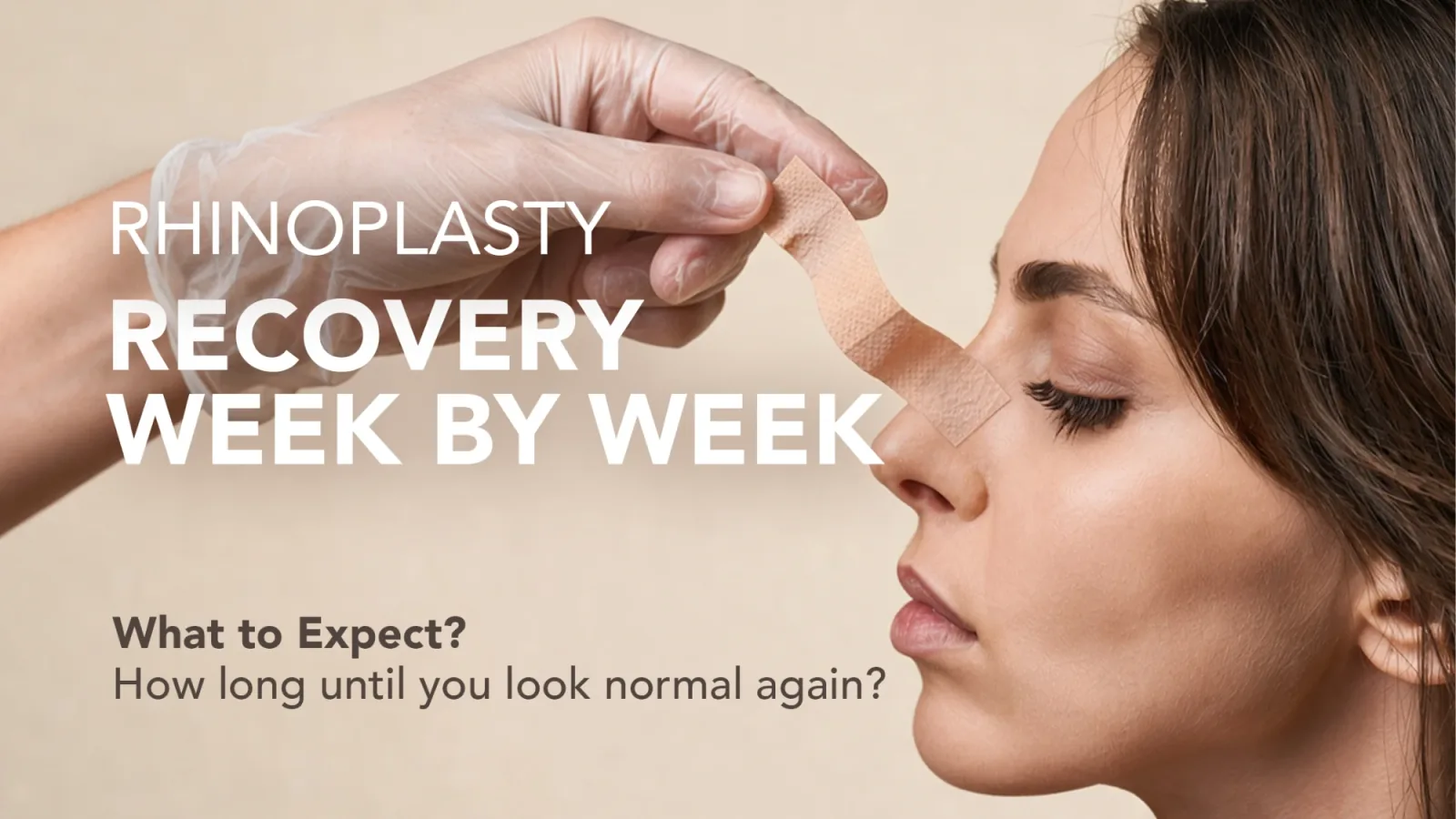
Thinking about rhinoplasty?
Send a few photos. Your surgeon tells you what is possible, free, before you decide anything.
Start with a free consultationMost people look presentable about two weeks after rhinoplasty, but the nose keeps refining for up to a year. The splint comes off at about day 7. Most visible swelling and bruising settle in 2 to 3 weeks. In 2026, the American Society of Plastic Surgeons notes it "may take up to a year" for the new shape to fully refine (ASPS).
Knowing what's normal makes recovery much calmer. This guide walks through each stage, from the first night to the first year. It also covers how long to stay in Bangkok and when you can fly home.
Beauty Butler is a Bangkok-based medical tourism agency that coordinates cosmetic surgery for patients from Australia, New Zealand, the US, Canada and the UK.
Key Takeaways
- Day 7: the splint usually comes off.
- Weeks 2–3: most visible swelling and bruising are gone.
- Weeks 4–6: most people return to exercise.
- 6–12 months: the final shape appears. Swelling at the tip settles last (ASPS, 2026).
- With Beauty Butler, plan for 7 to 14 days in Bangkok.
How long is rhinoplasty recovery?
The first recovery takes about two weeks. The full result takes 6 to 12 months. In 2026, ASPS notes that initial swelling goes down within a few weeks, while the final contour can take up to a year (ASPS). Those are two different finish lines, and it helps to know both.
- Short-term recovery (2 weeks): the splint is off, bruising fades, and you look like yourself in public.
- Return to normal life (4–6 weeks): exercise and most activities are back.
- Final result (6–12 months): the last swelling leaves, mostly at the tip.
Open rhinoplasty usually takes a little longer to settle than closed rhinoplasty. That's because more of the structure is reshaped.
Days 1–3: what's normal right after surgery?
The first three days are the hardest, and also the shortest. You spend one night in hospital. Your nose is covered by a splint, and you breathe through your mouth for a few days. Swelling and bruising around the eyes peak in this window.
What's normal:
- A blocked nose, like a heavy cold
- Bruising under the eyes, sometimes spreading to the cheeks
- A dull ache, usually well controlled with the medicine you're given
- Some light bleeding in the first day or two
What helps:
- Keep your head raised when you rest and sleep.
- Use cold compresses around the eyes, not on the nose, if your surgeon says so.
- Rest. Short walks around your hotel room help circulation.
With Beauty Butler, our own nurse visits you at your hotel every day during this time. They check your splint and dressing, look at the swelling and answer your questions.
Days 4–7: when does the splint come off?
Swelling starts to drop, and the splint usually comes off around day 7. That's the moment most patients look forward to. Your surgeon removes it at your follow-up and checks the early shape.
Don't be alarmed by what you see. The nose will look swollen and wider than the final result, especially at the tip. That's normal. The skin is still settling over the new structure.
Most people feel well enough for gentle outings by now. Many patients enjoy a quiet café or a short walk in Bangkok during this week. You still need to avoid bumps, heavy lifting and bending forward.
Week 2: when can you fly home?
Most patients fly home 7 to 14 days after rhinoplasty, once the splint is off and the surgeon has cleared them. By the end of week two, most bruising has faded and you look presentable. Light makeup can cover any yellow tones under the eyes.
Your coordinator plans your flight around your follow-up, not the other way around. Long flights after any surgery raise the risk of blood clots, so walk the aisle and drink water. Our guide to flying after cosmetic surgery has more tips.
Office work is usually fine after 10 to 14 days. If your job is physical, plan for longer.
Weeks 3–6: getting back to normal
Most visible swelling is gone by week 3, and most people return to exercise at 4 to 6 weeks. In 2026, ASPS notes that swelling "may come and go" in the first year and can be worse in the morning (ASPS). So a puffier nose on some days is normal.
During these weeks:
- Most people won't notice you've had surgery, unless they know.
- Light exercise often returns from week 4, if your surgeon agrees.
- Contact sports wait longer. Ask your surgeon.
- Glasses: your surgeon will tell you when they can rest on your nose again.
Protect your nose from the sun. Healing skin burns easily and can mark.
Months 2–12: when will your nose look final?
The final shape appears slowly between 6 and 12 months. In 2026, ASPS explains that the nose keeps refining for up to a year, and that you may notice gradual changes as it settles (ASPS). The bridge settles first. The tip settles last.
This is the stage where patience matters most. Many people judge their nose too early, at three or four months, when the tip is still full. It's better to wait for the full year before deciding how you feel about the result.
Take photos every month from the same angle. Comparing them is the easiest way to see the change. If anything worries you, send them to your care team. After you fly home, follow-up consultations with your surgeon are available on request.
How can you help your nose heal?
Simple habits make the biggest difference. Your surgeon gives you a full list, but these help almost everyone:
- Sleep with your head raised for the first weeks.
- Avoid bending forward and heavy lifting in the first two weeks.
- Don't blow your nose until your surgeon says you can.
- Sneeze with your mouth open to protect the nose.
- Skip smoking and alcohol. Both slow healing.
- Wear sunscreen and a hat outdoors.
- Eat well. Our guide on what to eat after surgery helps.
Lymphatic drainage massage can also help swelling settle. With Beauty Butler, it's part of the recovery-hotel package. Read more about lymphatic drainage after surgery.
How long should you stay in Thailand after rhinoplasty?
Plan for 7 to 14 days in Bangkok. That covers your hospital night, the splint removal at about day 7 and your surgeon's check before you fly. Rhinoplasty with Beauty Butler starts from THB 49,000 for closed rhinoplasty and THB 139,000 for open rhinoplasty.
During your stay, our own nurses visit you daily, and you're taken to every follow-up. Dr. Atikom Tanadpojanamart (Dr. Hope) performs rhinoplasty with us. He is a Thai board-certified plastic surgeon with more than 15 years of experience. See all our surgeons on the surgeons page.
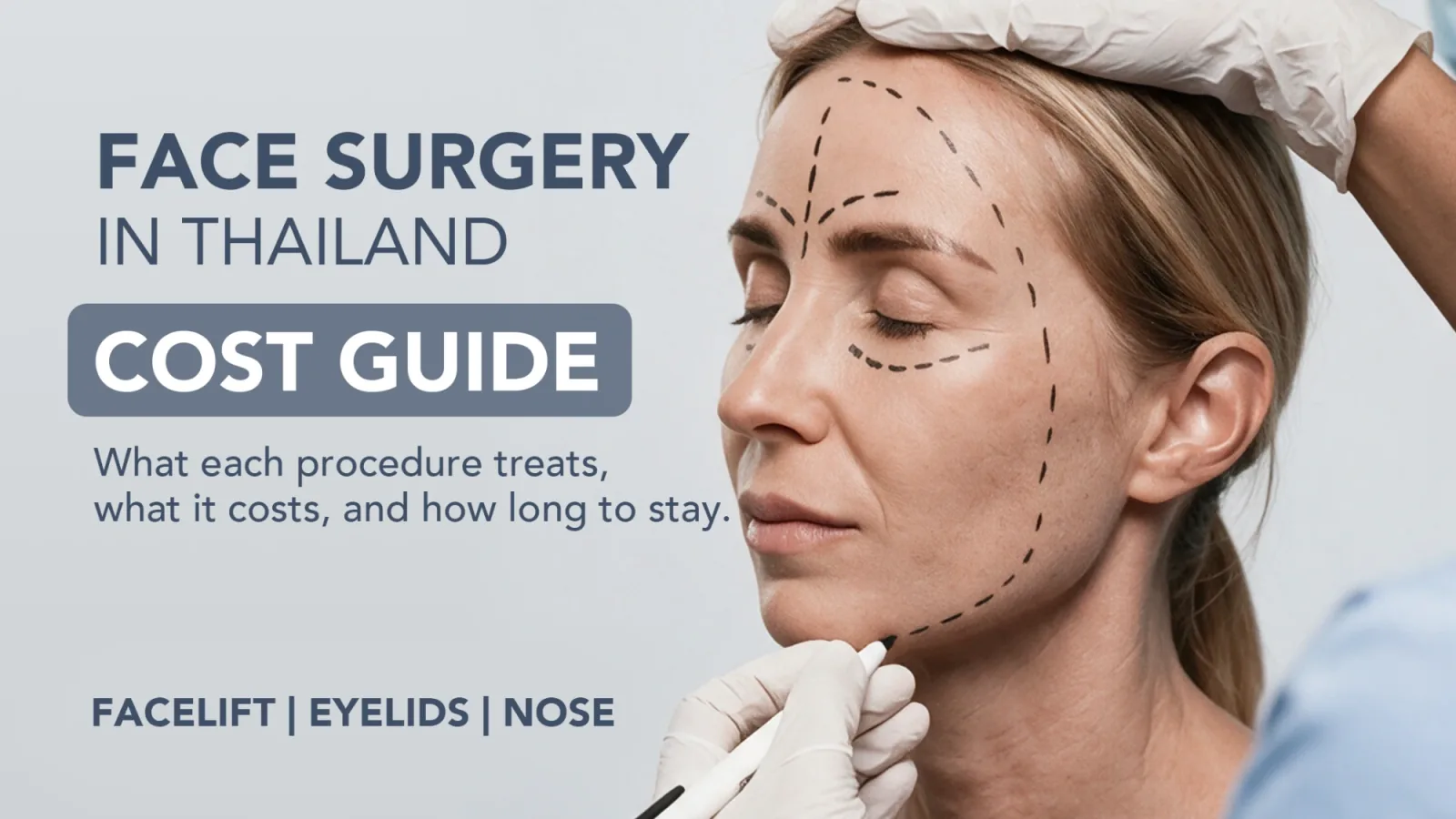
For full prices and options, see our rhinoplasty cost guide and the rhinoplasty page. Thinking about other face procedures too? Our face surgery guide covers them all.
Your next step
Start with a free consultation. Send us a few photos of your nose from the front and side, and tell us what you'd like to change. Your surgeon will tell you what's possible, and we'll plan your dates around a calm recovery. There's no payment until you're ready.
Start with a free consultation
Frequently asked questions
How long does rhinoplasty recovery take?
The first recovery takes about two weeks: the splint comes off around day 7, and most bruising fades by week 2 or 3. Most people return to exercise at 4 to 6 weeks. The final shape takes 6 to 12 months, as the last swelling at the tip settles.
When does the splint come off after rhinoplasty?
The splint usually comes off about 7 days after surgery, at your first follow-up with your surgeon. The nose will still look swollen and wider than the final result at this stage. That's normal and improves over the following weeks and months.
When can I fly home after rhinoplasty in Thailand?
Most patients fly home 7 to 14 days after rhinoplasty, once the splint is off and the surgeon has cleared them. Your coordinator plans your flight around your follow-up. On the flight, walk the aisle and drink water to lower the risk of blood clots.
When will my nose look normal after rhinoplasty?
Most people look presentable after about two weeks, once the splint is off and bruising has faded. By week 3, many people can't tell unless they know. The final shape appears between 6 and 12 months, and the American Society of Plastic Surgeons notes it can take up to a year.
Why is my nose tip still swollen months after surgery?
The tip has thicker skin and is the last part to settle. Swelling there can last 6 to 12 months, especially after open rhinoplasty. It can also come and go, and be worse in the morning. Take monthly photos and share them with your care team if you're worried.
This article is for general information and isn't medical advice. Your surgeon will give you guidance for your procedure and health, including a free video consultation before anything is booked.
References
- American Society of Plastic Surgeons, Rhinoplasty Recovery, retrieved 2026-10-25, https://www.plasticsurgery.org/cosmetic-procedures/rhinoplasty/recovery
- American Society of Plastic Surgeons, Rhinoplasty Results, retrieved 2026-10-25, https://www.plasticsurgery.org/cosmetic-procedures/rhinoplasty/results

The results you want — for a fraction of the cost.
Thailand's top surgeons, concierge care from first hello to flight home, and no hidden prices. Curious what's possible for you?
Explore your optionsTrue luxury is peace of mind, especially when you are far from home.