
.webp)
Weighing extra recovery support like hyperbaric oxygen?
Your concierge can help you decide what's actually worth adding to your plan.
Start with a free consultationThe honest verdict: hyperbaric oxygen therapy (HBOT) has strong, established evidence for salvaging at-risk skin flaps and grafts and for healing stubborn wounds, but only emerging and limited evidence for routine cosmetic-surgery recovery such as bruising and swelling. For facial cosmetic surgery specifically, a 2024 review found no robust evidence despite a plausible biological mechanism, with just three small observational studies to draw on (Rossi Meyer et al., Facial Plastic Surgery & Aesthetic Medicine, 2024). So the answer depends on your procedure, and you deserve to see exactly where the evidence is strong and where it is not.
This article is general information, not medical advice. Below we grade the evidence clearly, because you deserve the full picture before you decide anything with your surgeon. If you are planning a procedure abroad, it helps to read this alongside our complete guide to post-surgery recovery in Thailand.
What is hyperbaric oxygen therapy, in plain terms?
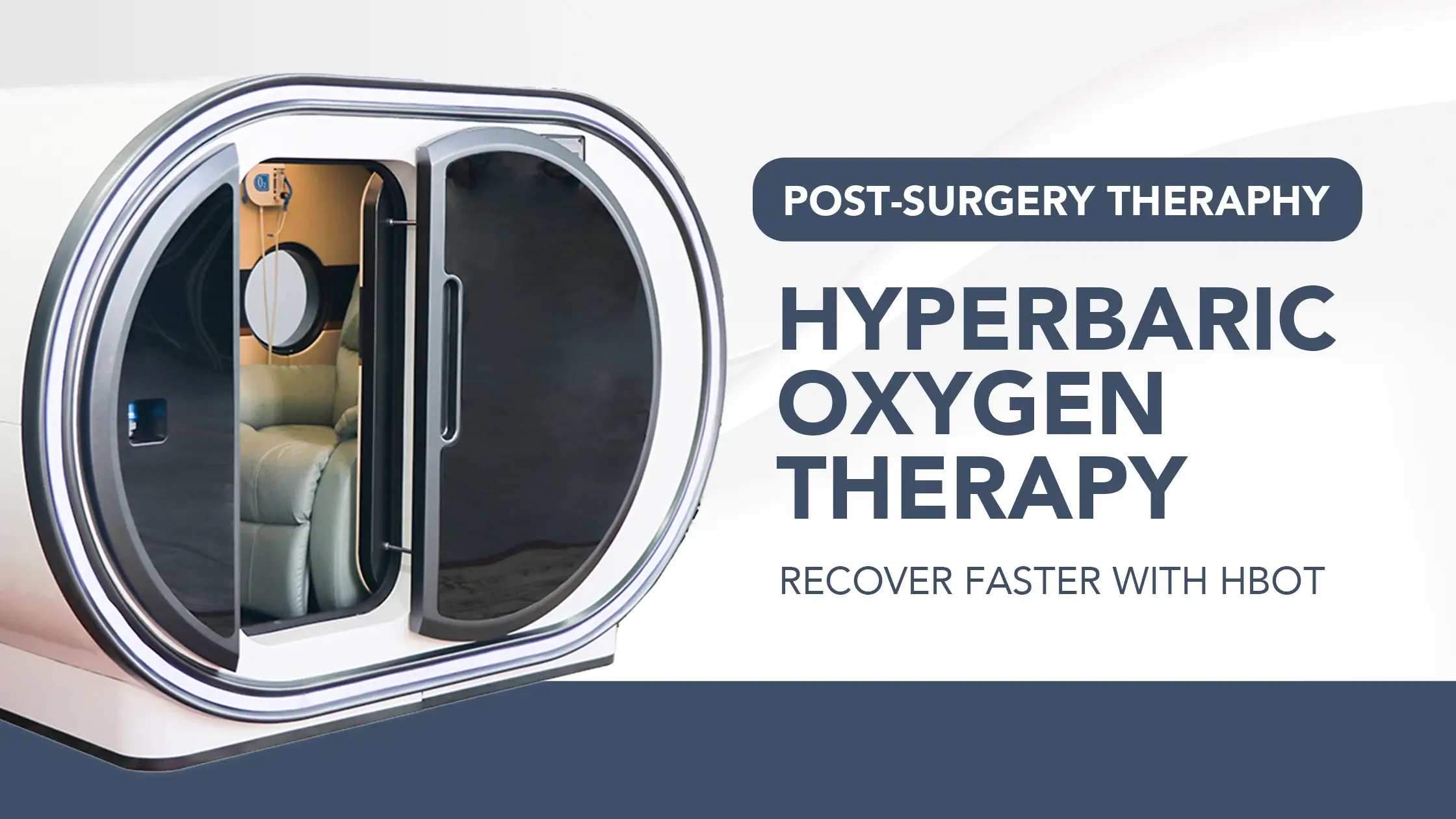
Hyperbaric oxygen therapy involves breathing near-pure oxygen inside a pressurised chamber, typically at 2.0 to 2.5 times normal atmospheric pressure (ATA). This raises the amount of oxygen dissolved directly in your blood plasma, well beyond what red blood cells alone carry, so oxygen reaches tissue that a healing wound would otherwise struggle to supply (Cleveland Clinic).
The mechanism itself is well established. Higher plasma oxygen supports the growth of new blood vessels (angiogenesis), stimulates fibroblasts and collagen cross-linking, and strengthens the body's antimicrobial defences (StatPearls / NCBI, 2024). Those are the biological building blocks of wound repair.
Here is the important nuance. A sound mechanism explains why HBOT might help recovery. It does not, on its own, prove that it does help for any given cosmetic procedure. That gap between plausible and proven is the heart of this article.
What does the evidence actually show?
Evidence quality varies enormously depending on what you ask HBOT to do. A 2026 review in Cureus confirms the therapy is genuinely effective for specific reconstructive and wound indications, while remaining unproven for many popular aesthetic uses (González Flores et al., 2026). Grading it honestly matters more than a simple yes or no.
Established: flap and graft salvage, plus non-healing wounds
The strongest evidence sits here. HBOT is a recognised, effective treatment for compromised skin flaps and grafts at risk of failing, and for non-healing wounds such as diabetic ulcers and radiation tissue injury (González Flores et al., Cureus, 2026). These are among the indications the FDA has actually cleared HBOT devices to treat (FDA, Letter to Health Care Providers).
The logic is direct. When a flap or graft is starved of oxygen, flooding the plasma with it can keep marginal tissue alive long enough to establish its own blood supply. This is relevant to procedures involving grafted tissue, including some hair transplant cases, though your surgeon decides whether it applies to you.
Emerging and moderate: bruising, swelling and healing time
For everyday aesthetic-surgery recovery, the evidence is promising but not settled. A 2025 meta-analysis in Aesthetic Plastic Surgery pooled 11 studies covering 734 patients treated at 2.0 to 3.0 ATA, and reported that HBOT was associated with reduced bruising, swelling and healing time (Mortada et al., 2025). That is genuinely encouraging.
But read the fine print. The authors flagged that the underlying studies were small and heterogeneous, meaning they varied in design, procedure and protocol. So the right framing is "some studies suggest a benefit," not "HBOT reduces swelling." If cutting recovery time is your goal, our guide to proven ways to reduce swelling after surgery covers measures with a longer track record.
Weak and limited: facial cosmetic surgery specifically
For facial cosmetic surgery on its own, the evidence thins out considerably. A 2024 review in Facial Plastic Surgery & Aesthetic Medicine found only three observational studies, and concluded there was no robust evidence of benefit despite the plausible mechanism (Rossi Meyer et al., 2024). We say that plainly, because your decision deserves honest information rather than a promise the research cannot yet back.
One small prospective study within that literature did report roughly 35% and 30% less bruising on days 7 and 10 after a facelift. Treat that as a single, small, illustrative finding, not a settled fact. It points to a question worth studying, not a promise you should book around.
Is hyperbaric oxygen therapy safe after surgery?
HBOT is generally considered safe when supervised properly, and most side effects are mild and reversible. A typical course runs at 2.0 to 2.5 ATA for 60 to 90 minutes per session, across roughly 20 to 40 sessions depending on the indication (Cleveland Clinic). The most common adverse event is ear barotrauma, the pressure discomfort you feel on a descending flight, which usually resolves.
Serious complications are rare in a properly run chamber. That said, HBOT is not suitable for everyone: certain lung conditions and recent ear surgery are among the cautions, which is exactly why medical screening matters.
One point deserves emphasis, and we want to be clear about it. The FDA has cleared HBOT for specific indications, such as at-risk grafts and flaps, non-healing wounds and radiation injury. It has not approved HBOT as a routine cosmetic-recovery treatment, and it has warned against unproven marketing claims (FDA, Letter to Health Care Providers). Approved for some uses does not mean approved for all.
How could HBOT fit into recovery in Thailand?
If HBOT is right for you at all, it is an addition to good recovery care, never a replacement for it. The foundations of healing after surgery stay the same: rest, nutrition, gentle movement, wound care and close clinical follow-up. Our coordinated recovery process is built around those fundamentals for every patient, with or without any add-on.
Your surgeon makes the call
Whether hyperbaric oxygen therapy is appropriate for you is a decision only your board-certified surgeon can make, based on your procedure and your health. A surgeon might consider it where tissue viability is a genuine concern, for example a flap or graft under tension, and see little reason for it after a straightforward procedure. This is a clinical judgement, not a menu choice, and we would never position it otherwise.
How Beauty Butler can help arrange access
Hyperbaric oxygen therapy is not part of a standard Beauty Butler package, and we do not operate a chamber or recommend it clinically. Here is the reassuring part. If your surgeon feels it could help your recovery, we arrange it for you at a trusted facility near your recovery hotel, so it is one less thing to organise. It is an optional add-on we coordinate on request. Bangkok has established HBOT facilities, so access is rarely the obstacle, and we handle the booking and transport so a surgeon-directed course fits calmly around the rest of your recovery.
What to expect if HBOT is recommended
Because protocols vary by indication, there is no single template. As a general guide, a therapeutic course involves multiple sessions of 60 to 90 minutes each, often daily, at 2.0 to 2.5 ATA (Cleveland Clinic). A course aimed at a specific healing concern usually runs longer than a handful of sessions.
Timing is surgeon-directed. Some indications call for starting soon after surgery, others later, and only your surgeon can set the schedule against your healing. During each session you rest in the chamber, breathe normally, and may feel mild ear pressure as it pressurises. If your surgeon does recommend a course, we will make sure the timing and travel slot into your recovery plan without stress.
Frequently asked questions
What is hyperbaric oxygen therapy and how does it work?
Hyperbaric oxygen therapy means breathing near-pure oxygen inside a pressurised chamber, usually at 2.0 to 2.5 times normal atmospheric pressure. This dissolves extra oxygen directly into your blood plasma, which supports new blood vessel growth, collagen production and antimicrobial defences, the biological processes behind wound healing (Cleveland Clinic; StatPearls, 2024).
Does HBOT help recovery after cosmetic surgery?
It depends on the procedure, and the evidence is mixed. A 2025 meta-analysis of 11 studies and 734 patients associated HBOT with less bruising, swelling and healing time, but the studies were small and heterogeneous (Mortada et al., 2025). So some studies suggest a benefit, though it is not yet settled science for routine cosmetic recovery.
Is there strong evidence that HBOT reduces facelift bruising and swelling?
Not yet. A 2024 review found only three observational studies on facial cosmetic surgery and no robust evidence of benefit, despite a plausible mechanism (Rossi Meyer et al., 2024). One small study reported around 35% less bruising on day 7 after a facelift, but that is a single, illustrative finding, not proof.
Is HBOT after cosmetic surgery the same therapy used for wounds and grafts?
It is the same treatment, but the evidence behind it is far stronger for wounds and grafts. HBOT is an established, effective treatment for at-risk flaps and grafts and for non-healing wounds, and these are FDA-cleared uses (González Flores et al., 2026; FDA). Cosmetic recovery is a separate, less-proven question.
How many HBOT sessions would I need and how long is each?
A typical therapeutic course runs roughly 20 to 40 sessions, each lasting 60 to 90 minutes at 2.0 to 2.5 ATA, though the exact number depends on the indication (Cleveland Clinic). Your surgeon sets the schedule. A course for a specific healing concern usually involves more than just a few sessions.
Is hyperbaric oxygen therapy safe, and what are the side effects?
It is generally safe under proper supervision, and most side effects are mild and reversible. The most common is ear barotrauma, the pressure sensation you feel on a descending flight (Cleveland Clinic). Serious complications are rare in a properly run chamber, but HBOT is not suitable for everyone, which is why medical screening matters.
Is HBOT FDA-approved for cosmetic-surgery recovery?
No. The FDA has cleared HBOT for specific indications, such as at-risk grafts and flaps, non-healing wounds and radiation injury, but not for routine cosmetic recovery. The FDA has also warned against unproven marketing claims for the therapy (FDA, Letter to Health Care Providers). Approved for some uses does not mean approved for all.
Can I get HBOT while recovering from surgery in Bangkok?
Yes, if your surgeon recommends it. Bangkok has established hyperbaric facilities, so access is rarely the obstacle. Hyperbaric oxygen therapy is not part of a standard Beauty Butler package, but if your surgeon feels it may help, we can help arrange access to a facility near your recovery hotel as an optional add-on.
Who decides whether HBOT is right for me?
Only your board-certified surgeon can make that decision, based on your procedure and your health. It is a clinical judgement about your healing, not a lifestyle add-on you select from a list. A surgeon might consider it where tissue viability is a genuine concern, and see little reason for it after a straightforward procedure.
Does Beauty Butler include HBOT, and how would I add it?
It is not included in any standard package, and we do not operate a chamber or recommend HBOT clinically. If your surgeon feels it may help your recovery, we can help arrange access to a facility near your recovery hotel, an optional add-on we coordinate on request. Simply raise it at your consultation and we will take it from there.
A calm, honest next step
Here is the summary. Hyperbaric oxygen therapy has strong evidence for flap and graft salvage and non-healing wounds, emerging evidence for aesthetic bruising and swelling, and limited evidence for facial cosmetic surgery specifically. It is not FDA-approved for routine cosmetic recovery, and no reputable source should promise you otherwise.
We would rather give you a clear evidence grade than a marketing line, because you deserve to decide from the full picture. Whether HBOT is appropriate for you is a decision only your board-certified surgeon can make, based on your procedure and your health. If it is recommended, we arrange it for you near your hotel as an optional add-on, so it is one less thing to organise. If it is not, your coordinated recovery is complete without it.
If you are planning cosmetic surgery in Bangkok and want a clear, honest conversation about recovery, start with a free consultation. The next step costs nothing.
References
- González Flores et al., Hyperbaric Oxygen Therapy in Plastic and Reconstructive Surgery: A Review, Cureus, 2026
- Mortada et al., Hyperbaric Oxygen Therapy in Aesthetic Surgery: A Systematic Review and Meta-Analysis, Aesthetic Plastic Surgery, 2025
- Rossi Meyer et al., Hyperbaric Oxygen Therapy in Facial Plastic Surgery, Facial Plastic Surgery & Aesthetic Medicine, 2024
- StatPearls / NCBI, Hyperbaric Oxygen Therapy: Mechanisms, 2024
- Cleveland Clinic, Hyperbaric Oxygen Therapy (regimen and safety)
- U.S. FDA, Follow Instructions for Safe Use of Hyperbaric Oxygen Therapy Devices: Letter to Health Care Providers

.webp)

.webp)

The results you want — for a fraction of the cost.
Thailand's top surgeons, concierge care from first hello to flight home, and no hidden prices. Curious what's possible for you?
Explore your optionsTrue luxury is peace of mind, especially when you are far from home.